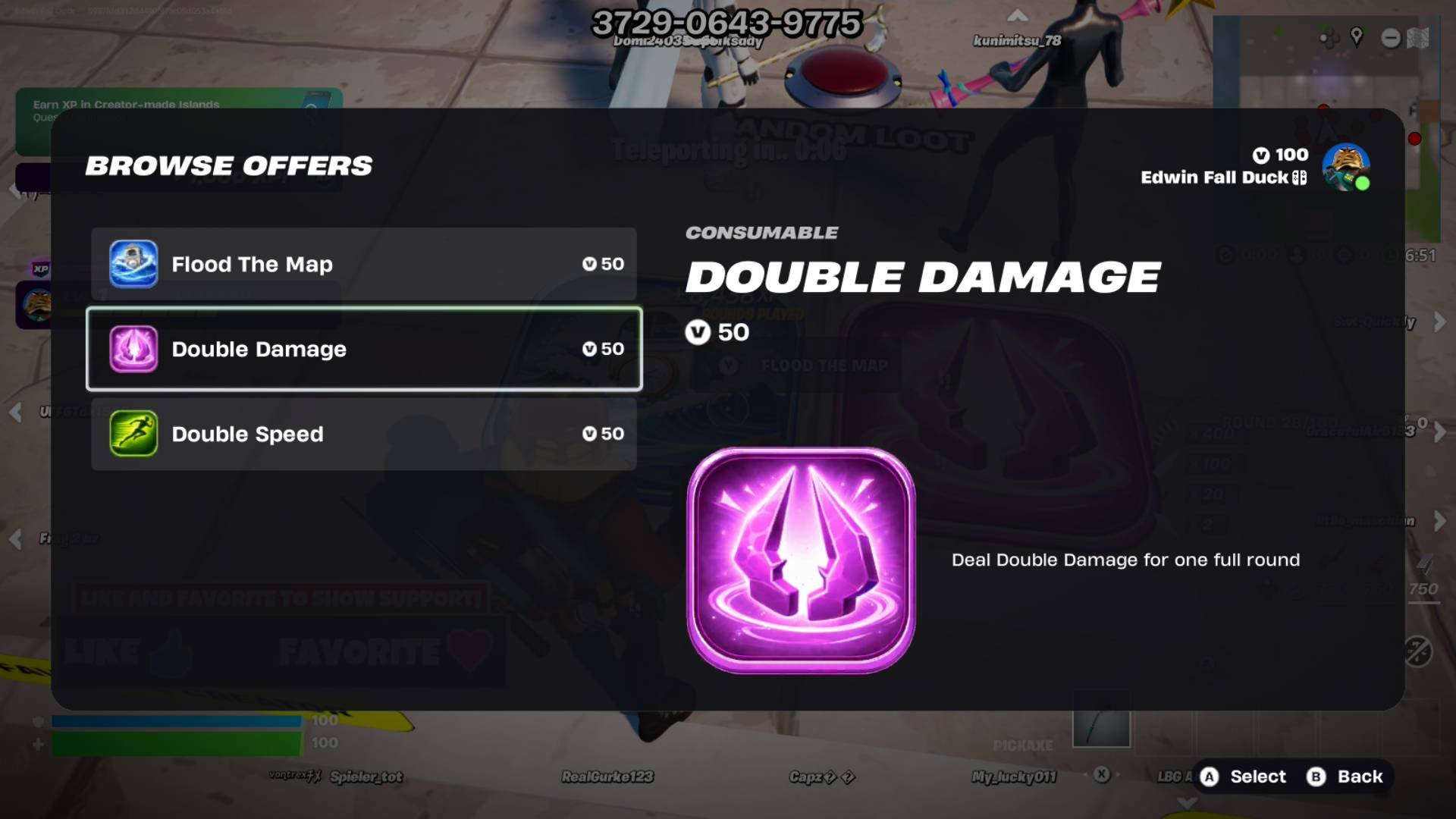
In September last year, Epic Gomes announced the introduction of the “In-island Trading” feature in Fortress Night, which allowed map creators to sell directly in their work, as part of the move to bring the game and its revenue model closer to Roblox. This autonomous micro-trading system, originally scheduled to be launched in December 2025, finally came online on 9 January, but triggered a controversy in the industry.The third-party game of “worried” leads to criticismAs the largest third-party game of Fort Night, Steal the Brainrot also peaked online at over 1 million last weekend. Game from Roblox is a multi-person online leisure game that collects and steals “Brainrot” as its core. Brain decay is randomly updated at map hotspots, with 100 gold coins for players to buy brain rot, buy and automatically return to base to generate passive income, and other players can pay 150 per cent of the premium “stolen” directly, triggering PVP chases and confrontations.

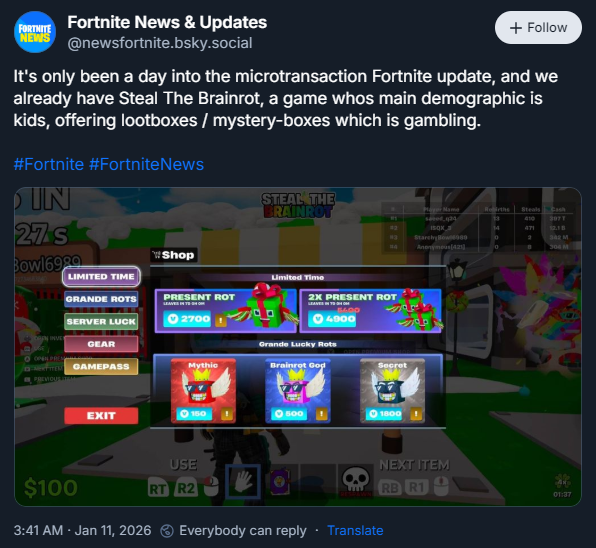
The Steal the Brainrot has followed up rapidly with the entry into force of the new Epic policy in a particularly radical manner. According to IGN, the map now provides a “brain rotting gift” bundle of 4900 Vs (approximately $37). In addition, players can spend 100 Vs on a virtual turnkey opportunity to randomly capture game effects or small cash incentives.
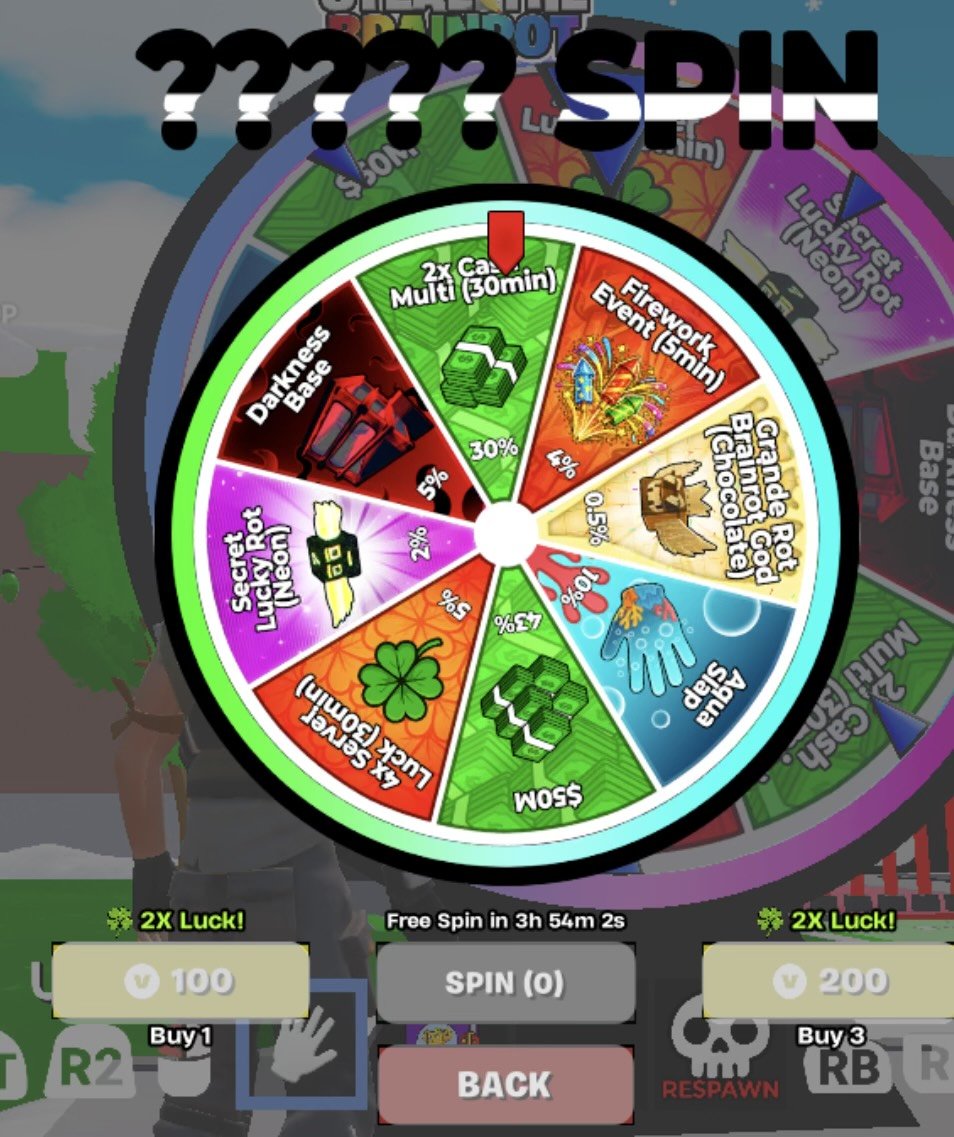
The roulette-drawing mechanism has been criticized for paying a transfer of 100 Vs, with a 2 per cent probability of “hidden lucky brain corruption” and only 0.5 per cent of the probability of “privileged-to-hot brain corruption”. “This update completely deprived Fortress Night of any quality better than Roblox. For two years there has been no self-defined weapons system, but it has been able to introduce tools that promote predatory commercial methods!”
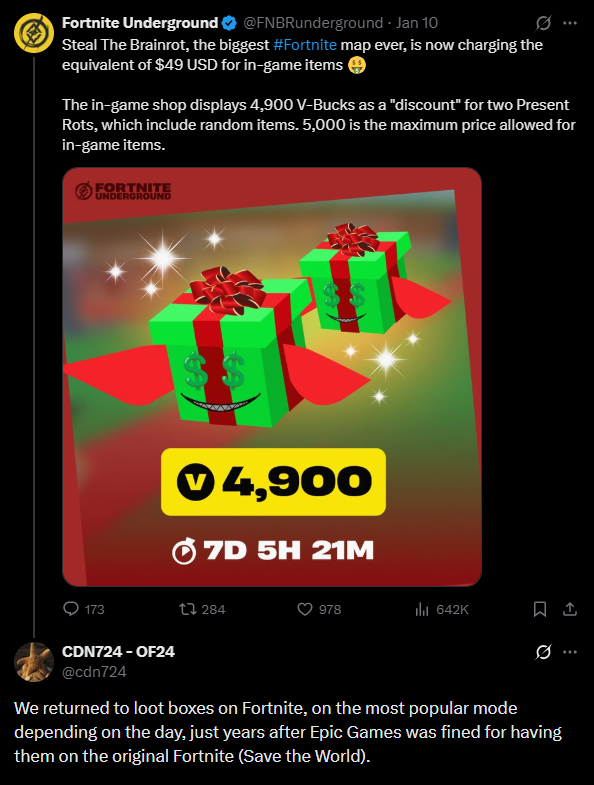
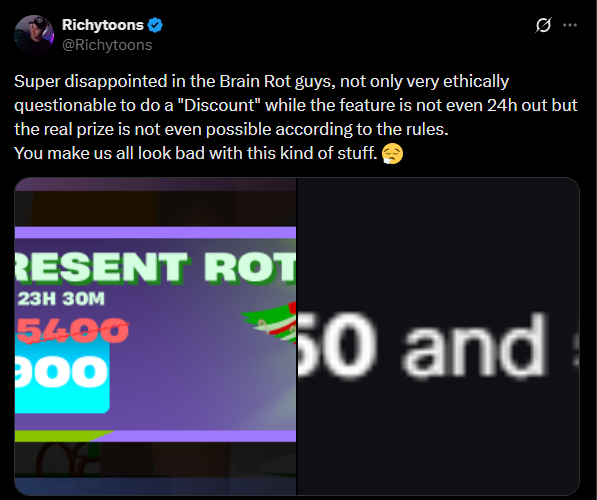
Another controversy focused on the high price of the “brain rotting gift pack” of US$ 4900 V at US$ 5400 V, which is now a time-limited discount. And Epic set a ceiling of 5,000 Vs for third-party props, which means that the so-called discounts are essentially equivalent to no discounts, since the “original price” cannot be actually sold. According to the third-party developer, Richytoons: “Steal the Brainrot team is very disappointed, and it is a moral doubt that a `discount’ on the line less than 24 hours ago, let alone a real reward is fundamentally against the rules. Such behaviour shames all our developers.”
Moon, a co-worker of Fort Night’s content, also wrote in social media: “The most popular self-defined game now is a gambling game for children who don’t know the way around it. The children will spend thousands of dollars blindly on a `opportunity’ to get a better game prop, and every time they find a map with small elements, they fall into this cash cycle.” Parents wrote at the Forum that “The Night of Fortress has been turned into a minefield where children are not allowed to play without supervision. They know that they can’t buy from official stores, but what new methods would these third-party `developers’, who have no moral base, use to package their micro-trading and deliberately lure children into paying for it?”Epic’s own trophy box disputeMany netizens rejected the ironic response that it was a parental responsibility to control child consumption. Just a few years ago, the game trophy box mechanism triggered a large-scale outcry. Epic Games himself was indicted for the existence of a “Kryptonite” trophy box in Fort Night and eventually removed the system.

Chief Executive Officer Tim Sweeney of Epic explained at the time: “Because we realize that some players will experience repeated frustrations with random items that fail to get expectations. Players should clear up what they buy when they charge in the game.” He also asked the industry at the 2020 DICE Summit: “Do we want to be tiger machine casinos like Las Vegas, or are we being respected as creators of credible products?” It needs to be made clear that Epic is not the creator of Steal the Brainrot and is therefore not directly responsible for the latter ‘ s participation in the mechanism of high-priced micro-trading and gambling, but also for its role as a platform provider and operator. Although Fortress Night provides parental control (including the prohibition of the payment of random items), the whole history of the game has repeatedly shown that such control measures have had limited effect in preventing children from playing games.
“Steal the Brainrot, as it stands, is in line with our rules and guidelines. We will keep the rules up to date as necessary. The developer must comply with the price range of 50-500 V in the provision of the item upon payment, with a clear probability that the value will be published.” Compared to Steal the Brainrot, other developers have implemented relatively restrained programs: the hot game Murder Mystery only sells non-prejudicing exteriors, and the Tilled Zone Wars allows players to pay $50 V to open full map flood effects for all players. It is worth noting that the Steal the Brainrot suddenly went off line for hours before the day, prompting the player to speculate that its fee mechanism had been dropped off Epic. The development team subsequently clarified, however, that procedural gaps had led to the resumption of the game to date, without significant changes.