According to the latest Bain & Company study, the number of head-mobile games with own-owned online shops (DTC, i.e., direct to consumers) has increased significantly over the past five years, and over 40 per cent of the popular hands-on DTC shops have been established, showing profound changes in the business model of the mobile game industry.
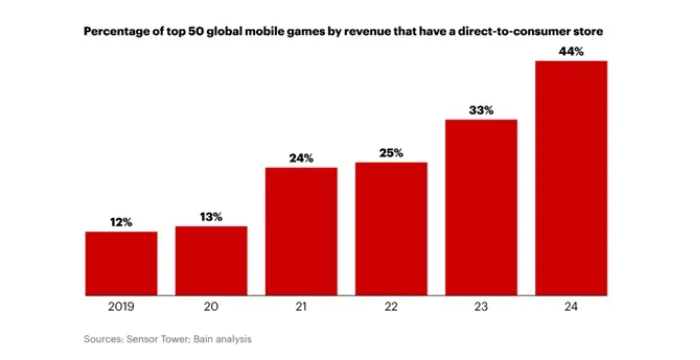
Bain&Company studies show that the share of DTC shops in the top 50 global income mobile games increased almost fourfold between 2019 and 2024. In 2019, only 12 per cent of the TOP 50 mobile games had a DTC store, which rose slightly to 13 per cent in 2020, significantly to 24 per cent in 2021, remained at 25 per cent in 2022, climbed to 33 per cent in 2023 and reached 44 per cent in 2024. This trend reflects the growing interest of developers in direct-to-consumer distribution channels and attempts to bypass high commissions and restrictions in traditional application shops such as Apple Store and Google Play.
The rise of the DTC shop is closely linked to the maturity of the mobile game market. Traditional application stores usually charge a high income share of 30 per cent, while the DTC store allows developers to deal directly with players, while reducing costs while enhancing user stickyness. In addition, the DTC model provides greater pricing flexibility and data control for developers and helps to optimize income and player experience.
In May 2024, Bain & Company conducted a study of 5243 players in the United States, Brazil, Indonesia, Japan, the United Kingdom and the United Arab Emirates, which revealed a variety of motives for players to choose the DTC store. DTC stores usually offer discounts, exclusive gift packs or subscriptions to attract high-value players.
Players wish to complete the transaction through a variety of payment modes (e.g. digital wallets, encrypted currency or local payments), while traditional application stores have relatively limited payment options. DTC shop flexibility met this demand, particularly in emerging markets such as Indonesia and Brazil. Players are aware that high commissions from traditional application shops may lead to higher prices, and DTC stores offer more competitive prices by reducing intermediate costs.
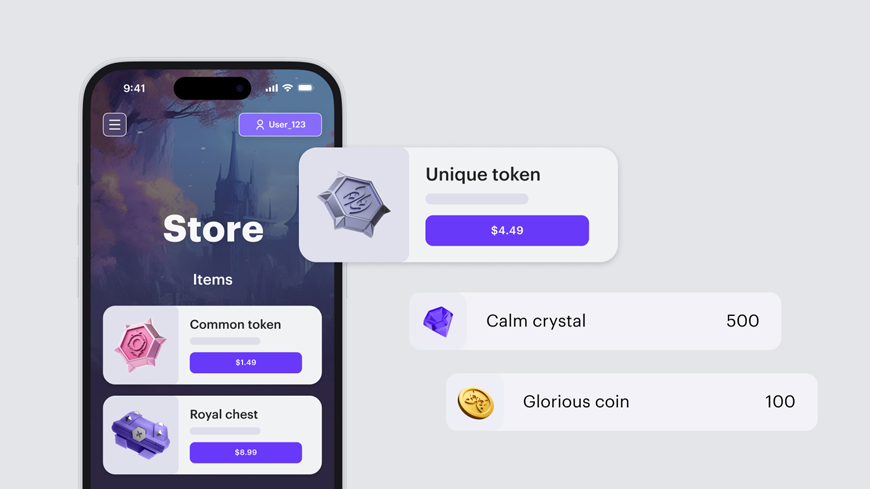
Some players consider the DTC store to be safer and data privacy more secure, especially in the more well-known game of the developers. The reputation of the play community and social media recommendations significantly influence the player ‘ s choice. DTC stores further enhance player loyalty through community activities and incentive mechanisms. Some players want to buy direct support to game developers through DTC rather than share their income to the platform.
However, the dissemination of the DTC model also faces challenges. Traditional application shops continue to be the main channel for players to access games, and developers need to invest resources to promote their own businesses. In addition, the restrictions imposed by apples and Google on the DTC model (e.g. external link policy) may make compliance more difficult. However, the recent back-to-back failure of Apple and Google in the application shop litigation suggests that policies are weakening the monopoly of the application store giant and creating more opportunities for the DTC model.