

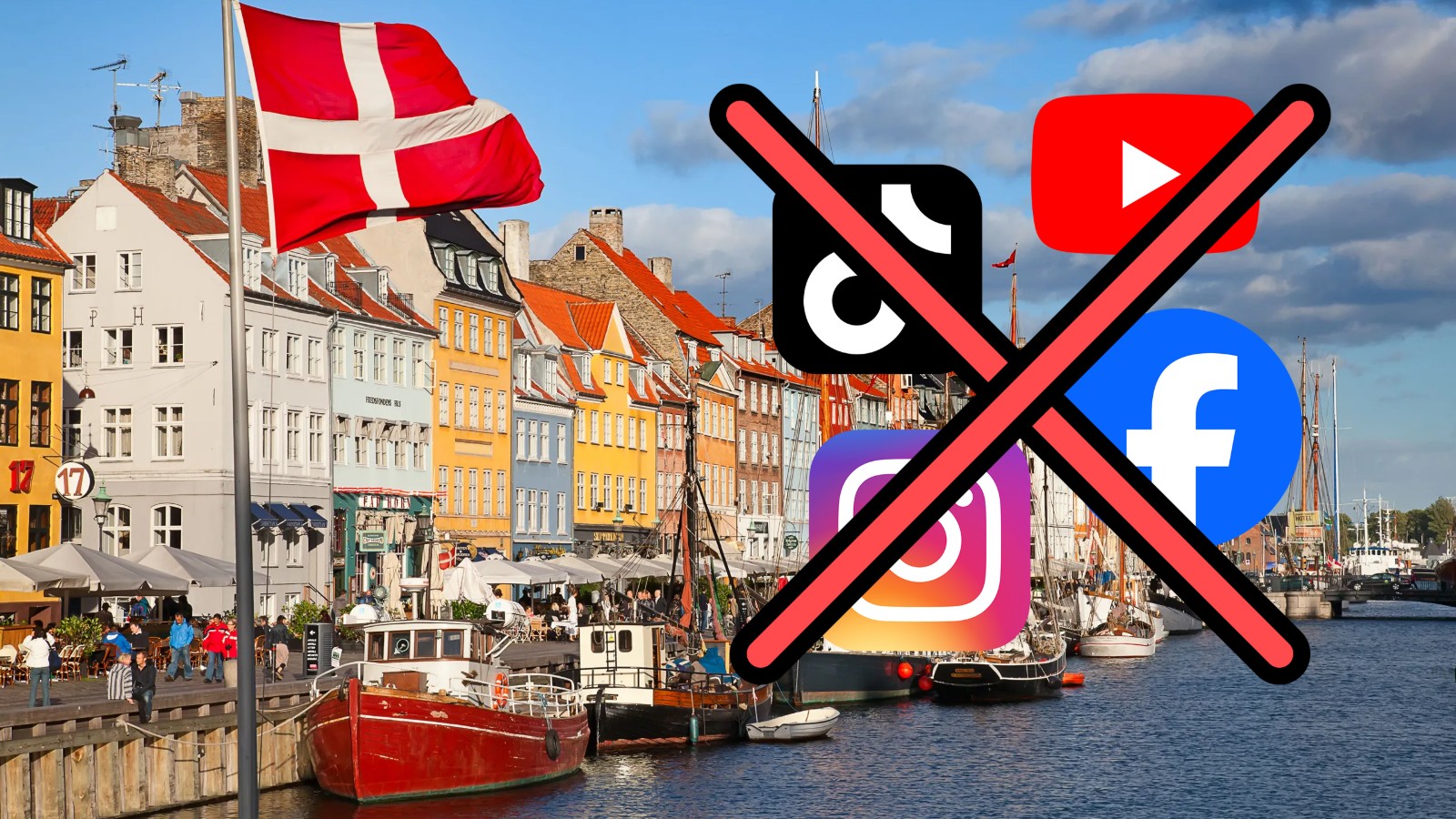
The problems posed by social networking sites have led Australia to implement age control in December, requiring the platform to import certification mechanisms and prohibit the use of the following 16 citizens. A similar act has now been passed in Denmark, which locks the age below 15 years.
According to foreign media reports, the Danish Parliament has reached an agreement to prohibit the use of social websites for children and adolescents under 15 years of age, to ensure that they are exposed to cyberbullying, unrealistic values and other potential mental health hazards when their mental development is not yet comprehensive.
However, the conditions in Denmark are relatively human, and the provision also includes a mechanism of parental guardianship, whereby children over 13 years of age can use these platforms with parental approval after a specific assessment.
However, although consensus was reached among parliamentarians, the implementation and date of access has not yet been finalized and there are plans to use electronic identification as a identification system and to develop an exclusive validation of App. Although the App could not be used, if it was not accompanied by age certification or inappropriate implementation, it would face a maximum of 6 per cent of the world ‘ s annual income.
In fact, under the EU General Data Protection Ordinance (GDPR), there is a requirement that enterprises may not allow children under 16 years of age to attend to accounts such as social media, AI services, etc. without parental authorization, except in part by choosing to change the age to 13 years, depending on the country, and without a clear and uniform certification mechanism for the regulations themselves, which can be filled out indiscriminately.
Denmark, on the other hand, has an implementation programme between Australia and the European Union, which provides 13 to 16-year-olds with the authority to apply and use, unlike Australia, which is completely prohibited, but also, like Australia, requires a more rigorous age-validation system that cannot be freely certified.