
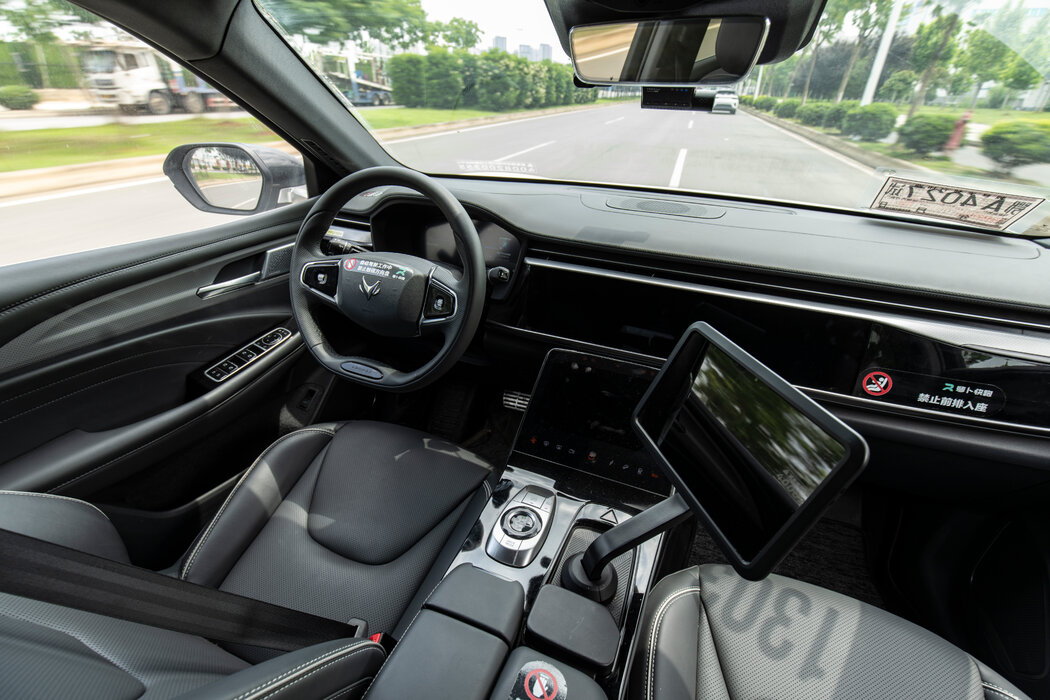
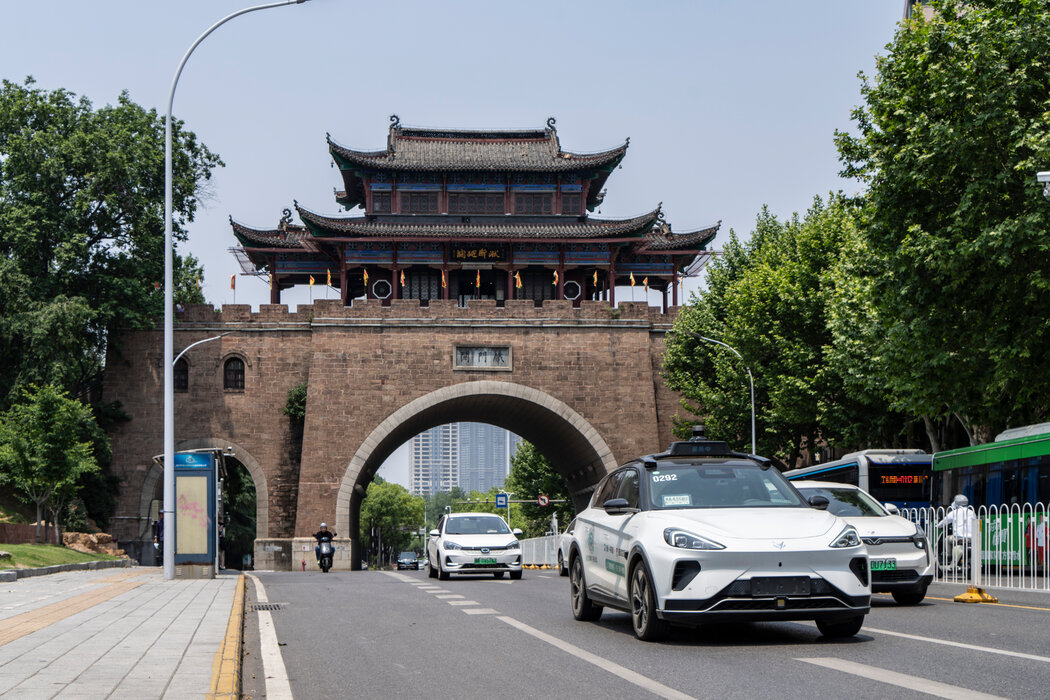
A 100-degree unmanned taxi on Wuhan Street, from last year
Chinese automobile manufacturers are joining forces with software companies to push their unmanned vehicles into the global market. At a time when Western manufacturers are not yet competitive, China’s auto-driving cars are ready to take a significant share in this growing market.
Although the EU imposed tariffs on China’s electric cars last year, and Europe has some concerns about the possible security implications of relying on Chinese suppliers, its auto-driving industry is expanding.
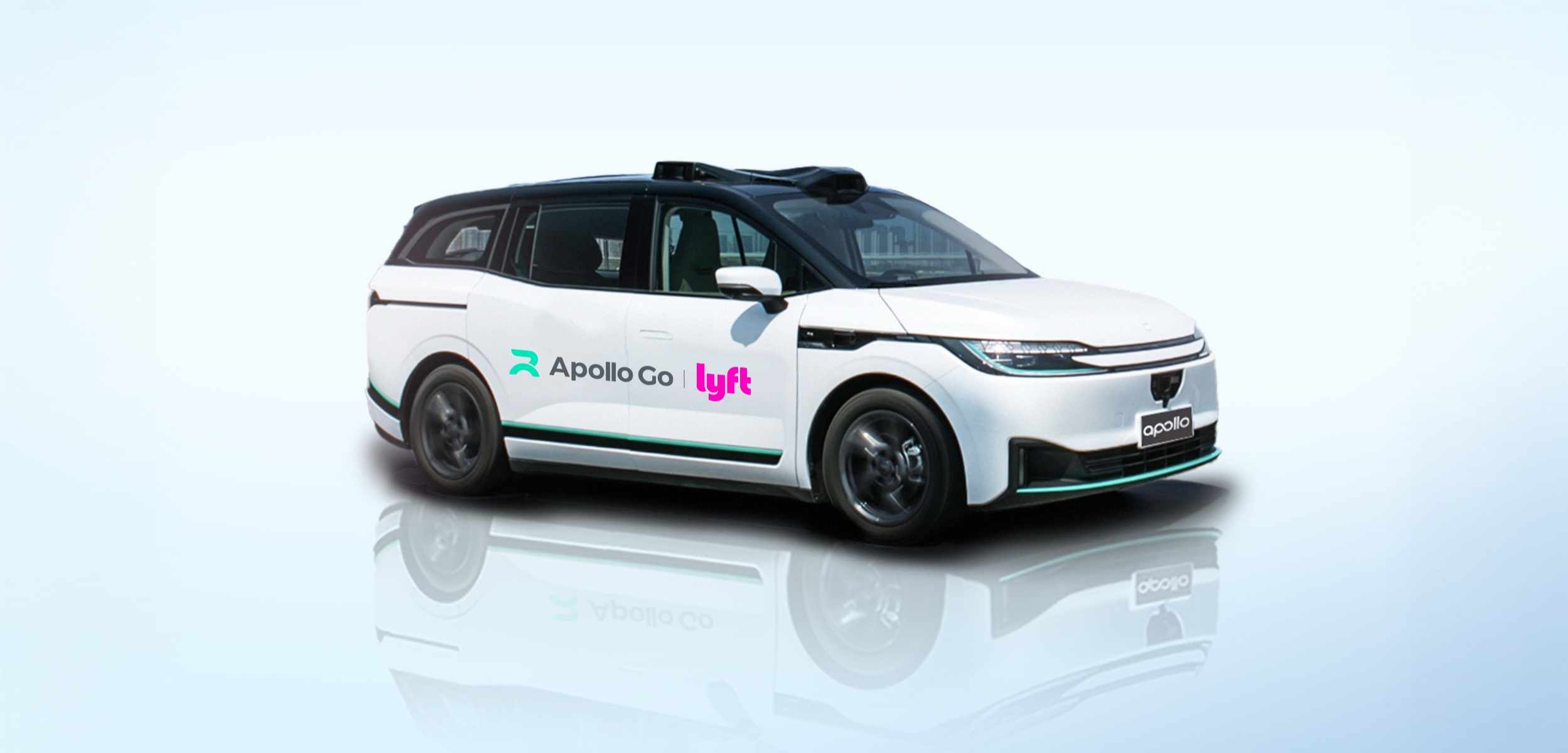
On Monday, 100 degrees, it was indicated that the United States CyberCar Services company Lyft would be provided with auto-driving vehicles assembled by the Chinese Gangbell car. Two companies stated that Lyft planned to start operating these vehicles in Germany and the United Kingdom next year with regulatory approval.
Three months ago, Uber and Momenta, a Chinese autopilot company, announced plans to introduce auto-driving services in an unspecified European city early next year. Momenta is about to provide Auxiliary Driving Technology to the Jihui vehicles of China for use in cars sold in the United Kingdom.
Although Momenta has not yet specified the type of car that it will use, it has been suggested that a Chinese model would be chosen. Gerhard Steiger, Chairman of the European Region of Momenta, stated that in China “the pace of development and pressure for large-scale delivery are driving rapid business improvement”.
The State-led banking system has been lending to the electric automobile industry at low interest rates as it competes for global leadership.
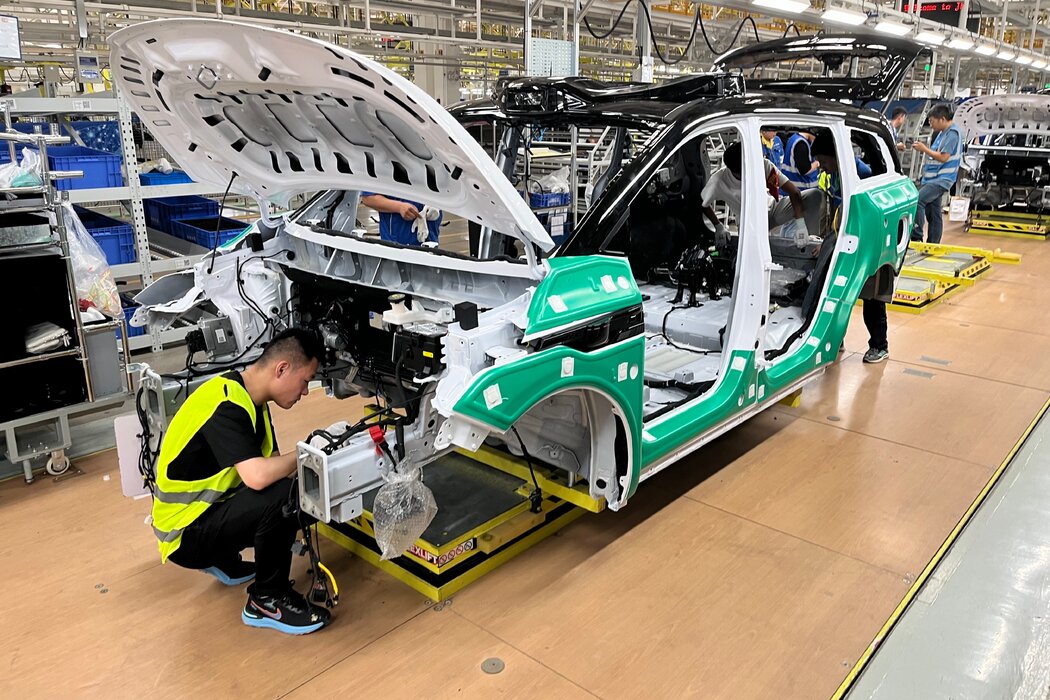
(A worker at the South Chang Gang Bell Motor Plant is working on an electric car assembly line, which will produce RT6 models for use in Europe for 100 degrees and Lyft)
Chinese unmanned vehicles have also begun to enter other markets. 100 degrees and Uber announced last month that their auto-driving services will be launched this year in Asia and the Middle East, except China.
Chinese car manufacturers have not yet attempted to introduce unmanned vehicles in the United States. This is partly due to concerns about the high cost of litigation for personal injury and the 100 per cent tariff imposed last year on electric cars imported from China. In addition, the United States severely restricted the use of Chinese auxiliary driving systems in January on security grounds.
These vehicles use cameras to photograph high-resolution images of dozens of roads and roadside areas per second during navigation. Automobile manufacturers and software companies indicate that the information in these photographs is rarely uploaded or stored. However, data collection raises concerns among United States policymakers and businesses. China also exercises strict control over driving-related data.
Chief Executive Officer Elon Mask of Tesla began the roll-out of unmanned vehicles in Austin, Texas, in June. Waymo (formerly Google Autopilot) also operates in Austin and in Los Angeles, San Francisco, Phoenix and Atlanta. In Europe, the public indicated that an unmanned version of the electric ID.Buzz minivan was being developed.
But automobile manufacturers outside China face high costs in terms of radar, cameras and other technologies required for so-called “cyborg taxis”. The price of electric cars is also higher. The retail value of ID.Buzz, which does not include automatic driving equipment, is between $62,000 and $722,000, while the smaller-sized Gangbell RT6 sells less than $30,000.
Over a dozen cities throughout the country have experimented with unmanned vehicles, involving at least 19 companies. Last year, 100 per cent of its pilot project in Wuhan resulted in the largest unmanned car experiment in the world.
In the United States, personal injury lawyers have begun to focus on the industry.
On Friday, a jury in Florida ruled that the deficiencies in the Tesla Autopilot software were one third responsible for a car accident in 2019. The car accident resulted in the death of a 22-year-old woman whose boyfriend was seriously injured. If the sentence is upheld on appeal, Tesla is required to pay her parents and her boyfriend up to $243 million in punitive and compensatory damages.
Unmanned technology performed better in electric vehicles than in fuel vehicles. This is due to the fact that the computer system of the electric vehicle is able to regulate the power of the wheel very quickly. China is the world’s leading producer of electric cars.
It is not easy, let alone new countries, to expand the service of automatic taxis to new cities. While these vehicles do not have drivers, it is common for each vehicle to require an operator to deal with sudden problems and answer user questions. Moreover, these vehicles often require specialized programming for the specific traffic conditions of each city.
Nevertheless, Lyft and 100 degrees indicated that they planned to “expand the fleet to thousands in the coming years, covering many European countries”.